
No one really prepares you for the moment you notice your parent getting older.
It doesn’t announce itself. There’s no flashing light or breaking news. One day, you catch your mum repeating the same story twice in a single dinner, or your dad insisting he doesn’t need help with the groceries—then pausing halfway up the stairs to catch his breath. The little things start stacking up quietly, until suddenly, they hit.
Here in Singapore, that feeling can hit even harder. Life moves fast. Workdays stretch endlessly. Commutes are long. Weekends vanish under the weight of errands. You want to be there for your parents, yet meetings, deadlines, and perhaps your own children keep pulling you away.
And then, inevitably, a thought sneaks in, heavy with guilt:
What if they need more help than I can give?
This is where an elderly caregiver can be a game-changer—not a replacement for family, not a shortcut, but reinforcement.
Start With a Real Conversation (Yes, Even If It Feels Awkward)
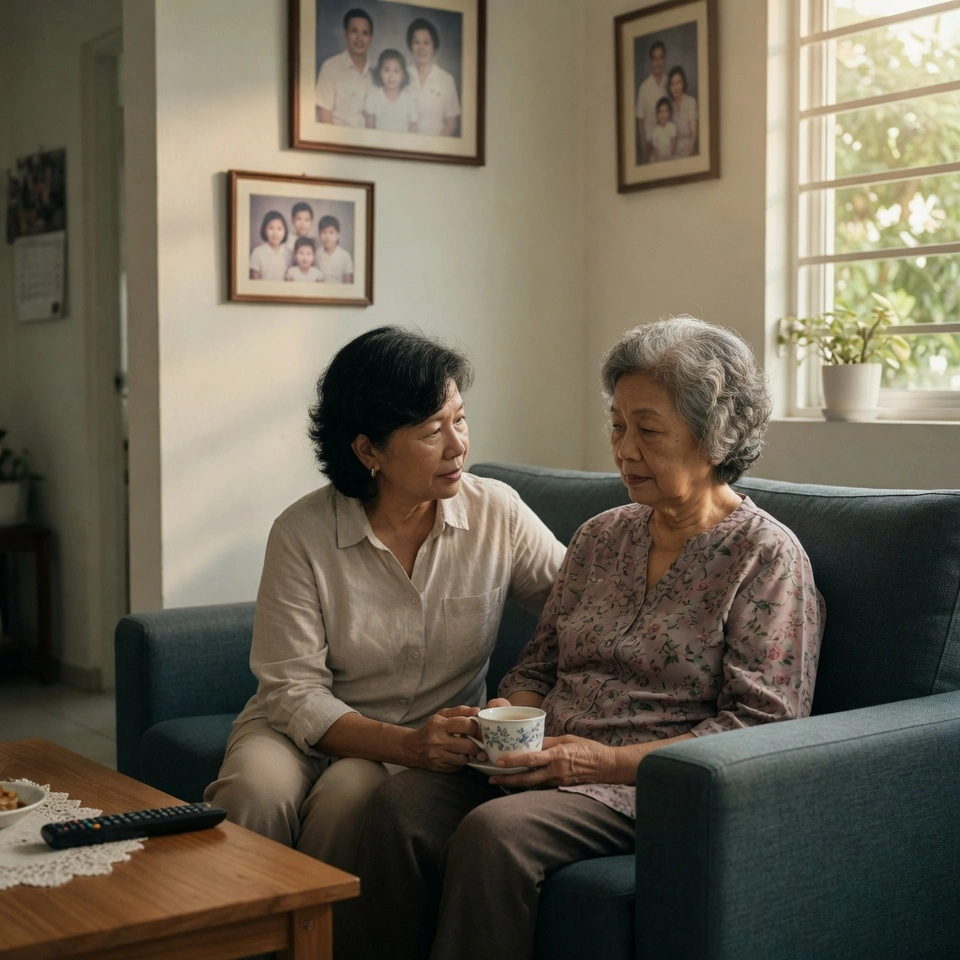
Before you Google rates or scroll through agencies, just sit down with them. Ask what they really need.
It’s tempting to jump straight to worst-case scenarios, but care exists on a spectrum. It could be simple:
- Someone to go with them to medical appointments
- Help with cooking and light housekeeping
- A friendly presence so they’re not alone during the day
Or it could be more hands-on:
- Assistance with bathing and dressing
- Medication supervision
- Mobility support
- Monitoring dementia-related behaviour
- Post-hospital recovery care
Here’s the tricky part: many older adults resist help. They see it as losing independence. So try framing it differently—not as giving something up, but as gaining support. The goal isn’t to take over their life; it’s to make their life safer, more comfortable, and more fulfilling.
Understanding Care Options (Without Feeling Overwhelmed)

Life can be complex in Singapore and no topic is more so than the choices one can make regarding different types of care options available to families today. The different types of care options available to families today include combinations of professional caregivers and other forms of support they can rely on.
Live-In Helpers
Live-In Helpers are the ideal type of care for many families, as they can provide constant support and care to your elderly parents. They live with you and your elderly parents and help with their daily needs, such as bathing, dressing, and preparing meals. As with hiring any foreigner to live in your home, there are Levies to pay, insurance to obtain, and often additional accommodation costs. So, as with any foreigner living in your home, there will be some costs to consider.
Part-Time Caregivers
They can visit your loved one for a few hours in the morning, in the evening or on specific days of the week. Such elderly individuals are mostly independent and need some assistance during specific times of the day like morning, evening or when the family members are at work.
Nursing Care
If your parent has specific or complicated medical needs such as needing to recover from an operation or manage a chronic illness, then employing a Nursing Caregiver may be required. They are more expensive than other types of caregivers but are necessary for some people.
Agency vs Direct Hiring
There are many agencies in Singapore providing professional caregivers to seniors. Each agency charges differently. One of the main things to consider when choosing a caregiver is whether to hire her directly or through an agency. An agency will screen potential candidates for you and provide all the necessary paperwork. If the caregiver were to leave your employment, the agency would send a replacement for you. On the other hand, hiring a caregiver directly can be cheaper, as you would not need to pay any agency fees. However, you would then have to manage all the necessary paperwork for her and find a replacement if she were to leave your employment.
Finding the Right Fit
On paper, many caregivers look similar: experience, certificates, polite introductions. But the right fit is about personality too.
I once knew a woman who hired a caregiver for her father after a mild stroke. The caregiver was competent—medications on time, meals nutritious—but her father, usually chatty and joking, became quiet. Eventually, they realised it wasn’t neglect; it was personality. He needed someone who laughed with him, shared stories in his dialect, and could match his energy. Once they found the right person, his spark returned.
Look for:
- Patience, especially with repetitive questions
- Emotional steadiness
- Respectful, clear communication
- Cultural and language alignment
- Willingness to work with family
Remember that you are not hiring a machine for your parent’s care – you are bringing someone into your home and personal space.
Questions Worth Asking (Even If It Feels Awkward)
Interviewing someone to care for a parent can feel strange, but clarity protects everyone. Ask about:
- Experience with similar medical conditions
- Emergency handling
- How they provide updates
- What a typical day looks like
- Backup plans if they fall ill or need leave
Notice not just the answers, but how they respond. Calmly? Patiently? Open to your concerns? Tone matters as much as content.
Being Honest About Costs
Caregiving in Singapore is not cheap but also not worth family burnout. Knowing the true costs help plan for surprises.
Typical cost ranges (indicative, 2026)
Note that while these figures are intended to be indicative, actual costs could vary based on several factors, including specific agencies, and the nature and needs of the individual. In the case of live-in migrant domestic workers (MDWs), typical costs would be as follows:
- Live-in migrant domestic worker (MDW): Typically, a live-in MDW would cost around $600–$1,000 + (Levy + Food + Housing) per month.
- Part-time Professional Caregivers: Typically, professional part-time caregivers charge $ 20–$35+ per hour, depending on experience, whether it’s for general care or for those with specific needs like dementia care and so on. Also, the time of day affects the rate.
- Nurse-trained or higher-intensity care: Noticeably more expensive, whether delivered through an agency or private nursing service.
Note: These costs are only indicative. Many factors will play a part in the final cost. The figures provided do not include agency fees, medical checks, medical insurance, or rest days for the helper. Please ensure you request a detailed breakdown of all costs.
Key government support that can reduce the load
Enhanced Home Caregiving Grant
From April 2026, the Enhanced Home Caregiving Grant of up to $600 monthly per individual will be given to eligible families.
- $600 if household income per person is $1,500 or below (or no income and annual value of residence ≤ $21,000)
- $400 if between $1,501 and $3,600
- $200 if between $3,601 and $4,800
The care recipient must be a Singapore Citizen or eligible Permanent Resident who requires permanent assistance with at least three of the six Activities of Daily Living (ADLs), which are: feeding, dressing, toileting, washing, walking/moving around, and transferring. The Application for Enhanced Home Caregiving Grant must be accompanied by a copy of the care recipient’s Functional Assessment Report, which can be obtained from the AIC.
Migrant Domestic Worker Levy Concession
Normally, the levy for a Migrant Domestic Worker would be $300 per month. However, for eligible households, the levy concession is capped at $60 a month. Such households include: (i) Singapore Citizens aged 67 years and above living at the same address as the household head; (ii) Singaporeans and Eligible Permanent Residents with disabilities who require assistance with one or more Activities of Daily Living (e.g. bathing, feeding, toileting).
Caregivers Training Grant
Up to $400 a year per care recipient to offset the cost of approved caregiving courses — useful for both family members and your helper.
How to Choose an Elderly Caregiver
As noted earlier, paying the lowest salary for a helper does not necessarily translate into saving in the long run, as a change in employee can end up being more expensive than the higher initial salary. Also, the employee’s lack of skills and unwillingness to take on additional tasks for your parent would cause you more stress. The entire package, including the salary, foreign domestic worker levy, employer’s foreign worker medical insurance (if any), foreign domestic worker’s food and living allowance, any government grants for which you are eligible, and the agency’s replacement costs, should be taken into account and discussed with us when we advise you on the best option for you and your parent.
For a list of available AIC grants and their eligibility criteria, you can refer to the AIC website. Alternatively, you can also contact the AIC hotline at 1800 650 6060. By going through a simple means-test and submitting a Functional Assessment Report (FAR) by your parent’s doctor, you can quickly determine which grants you and your parent are eligible for and compare the costs and benefits of the different options available.
Watch for Red Flags
Not every mismatch is obvious. Look out for:
- Vague answers about experience
- No onboarding or assessment process
- Inconsistent communication
- Pressure to decide quickly
- Your parent withdrawing or acting irritable
Trust your instincts—you know your parent best.
Helping Your Parent Adjust
Even the right caregiver needs time to be accepted. Small frictions are normal. Privacy shifts, routines change, pride is tested.
Ease the transition:
- Introduce the caregiver gradually
- Be present during early visits
- Establish clear routines
- Encourage honest feedback
- Check in privately
Resistance doesn’t always mean rejection. Sometimes it’s just change taking time.
Reevaluate When Needed
Care needs evolve. A parent who needed companionship last year might now need mobility support. A caregiver who was perfect before may no longer be the right fit. Adjusting hours, changing arrangements, or adding specialised care isn’t failure—it’s responsible.
The Guilt Nobody Talks About
Adult children carry guilt quietly: for not doing enough, for being away, for feeling tired.
Hiring help doesn’t reduce love. Often, it preserves it. When you’re not stretched thin, you can really be a son or daughter again—talk, laugh, sit together—without calculating medication schedules in your head.
The right elderly caregiver service doesn’t replace family. They protect the space where family can still feel like family.
In a city like Singapore, where life moves fast and demands are high, that support isn’t indulgent—it’s wise.