Over the past few months, I ended up hopping around three very different flats without really planning to. One 4-room HDB, a shoebox condo that felt like it was designed by someone who never lived in a small space, and a 5-room unit that needed a serious reset.
Somewhere in between measuring corners and arguing with a carpenter about millimetres, I realised something: people aren’t chasing “statement interiors” anymore. They just want homes that stop irritating them.
Small spaces are getting smarter. Or at least, the way we use them is. People want places that hold up to daily chaos but still look like you thought about it for at least five minutes.
This guide pulls together the top 6 interior design ideas that Singapore homeowners are embracing in 2026, while still being useful in everyday life.
Also, this came together mostly from living rooms that refused to behave.
1. Soft-Minimal Open Concept Living
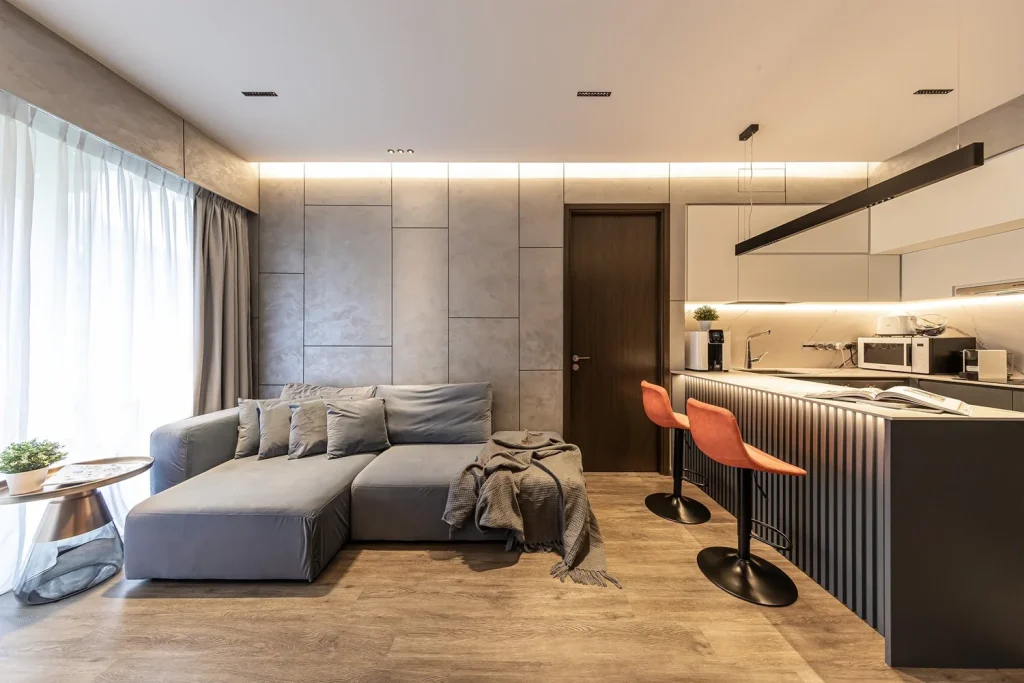
Soft minimalism has been getting thrown around everywhere, but the version most people imagine is that sterile, “don’t touch anything” museum look. Nobody wants to live like that—at least nobody I’ve met.
What actually works in Singapore homes is a softer, warmer version: fewer things, yes, but fewer things that you actually enjoy using. You know, stuff that doesn’t make you sigh every time you bump into it.
If I’m being honest, most of my clients end up with low-profile modular sofas simply because they fit real life better. I once recommended one to a Toa Payoh family and somehow—don’t ask me how—we freed up about 0.8m² of circulation space. Doesn’t sound like much, but they genuinely felt like they’d won the lottery.
This is the part where people usually disagree with me.
Picture a Saturday evening: one setup for a cozy movie night, and the very same pieces rearranged for a lively gathering with friends. They adapt to your life, not the other way around. And yes, I’ve moved so many sofa modules around at installations that I could probably qualify for a part-time logistics job.
Soft minimalism extends to all your furniture options like lightweight armchairs or slim-profile consoles. And if you have kids or anyone who likes to sprint around the house at random? Well, rounded edges will save you more stress than you can quantify. Also, these choices maintain openness and prevent visual clutter.
Lately, I see rounded edges, in particular, aren’t just about looks. In compact HDB layouts, these soft, organic shapes create a safer environment for children and elderly family members. Their calming curves also help encourage better movement and flow within an open space.
It’s mostly about intentional simplicity rather than bareness. Each piece should earn its place, whether through comfort, function, or simply making the room easier to live in.
Color-wise, stick with soft whites, warm sand tones, and latte browns. Nothing too loud. If you want a bit of contrast, add a single small item in forest green or charcoal instead of repainting a whole wall.
Soft minimalism works beautifully for both condo layouts and 4- or 5-room HDBs in Singapore, especially when merging living and dining zones into one fluid space.
Honestly, I still don’t know why this works, but it does.
2. Textured Statement Walls (A Sensory Sanctuary)
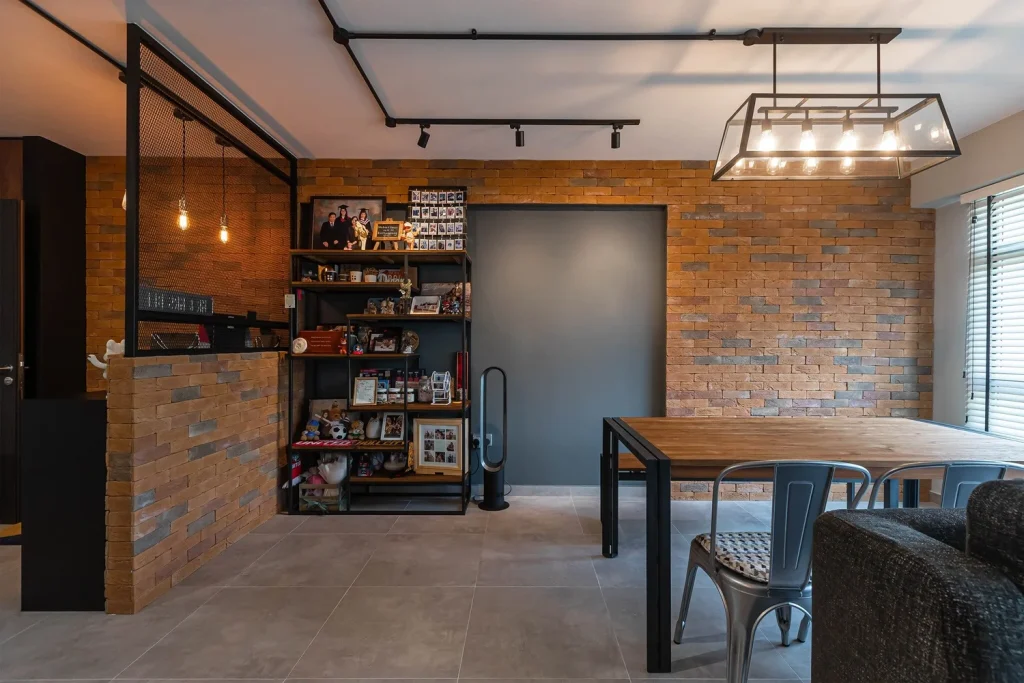
Texture is making a comeback because, frankly, we all want to touch something that isn’t a screen. Sometimes I just run my hand over a wall and feel a tiny moment of happiness—don’t judge me.
Vertical grooved panels, soft plaster, or a fluted timber feature behind the TV add interest and hide scuffs better than plain paint.
Materials that actually feels nice
Textural materials like grooved wall panels, fluted timber, rugged microcement, and stone-inspired laminates are leading the way.
Lime-wash or soft plaster, in particular, gives you that hand-done, slightly rustic look. These finishes are naturally imperfect with subtle variations in every stroke. Honestly, I used to think that stuff didn’t matter until I saw a client light up over it. And you can actually see the handwork in it, the tiny irregularities that make the wall feel warmer and more personal.
There’s also a bit of wabi-sabi charm in these finishes. The tiny variations and uneven strokes give the wall lived-in warmth that plain paint never really achieves.
Yeah, it actually works—surprisingly.
Nobody tells you this until after renovation: many lime-wash and plaster finishes are lower-VOC than standard paints, which is reassuring if you’ve got kids or just prefer cleaner air at home.
Textured finishes also improve acoustics in open-plan layouts by softening echoes. A small detail, but noticeable over time.
For HDBs, placing textured panels behind the TV, on the foyer wall, or behind the bed instantly elevates the interior. Though, of course, some people will roll their eyes at me for saying that. They’re also great at hiding small scuffs, which is a lifesaver in homes with kids, pets, or just everyday bustle.
I know it sounds over the top, but it really does make a difference when you’re living there. A friend even insisted this was unnecessary once, he was WRONG.
3. Biophilic Living Rooms— your small nature fixes
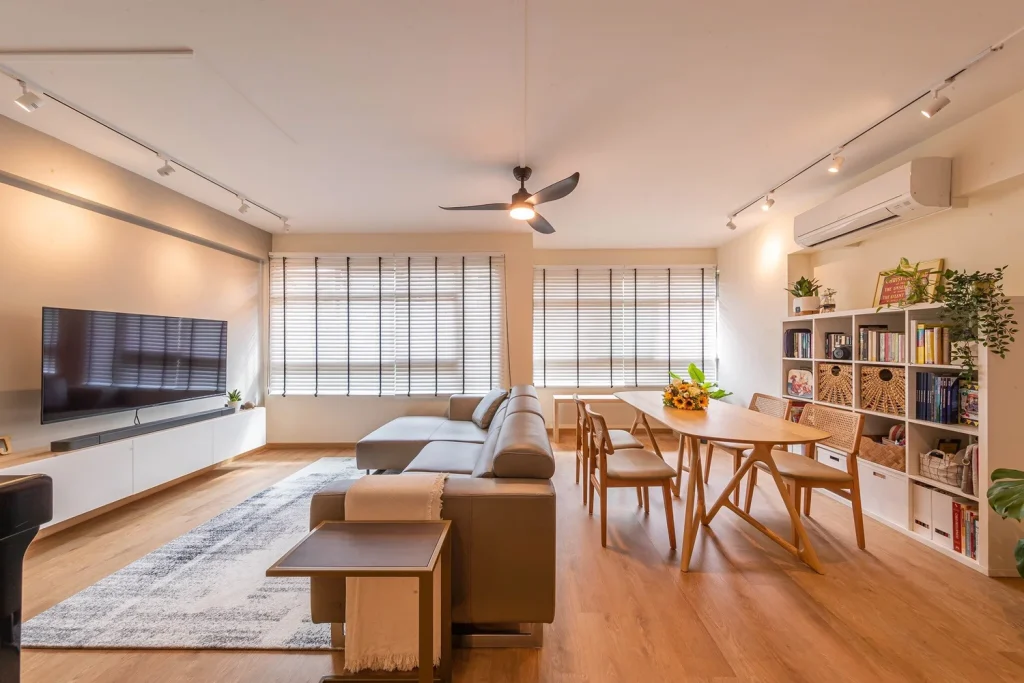
I’ve noticed that when I visit clients’ homes, the ones that feel instantly calmer almost always have a touch of nature somewhere, even if it’s just one healthy plant sitting by the window. You don’t need a mini forest to feel the effect.
Practical tip before anything else: if your unit has a balcony, consider adding a narrow built-in planter ledge. It frames the view, provides a bit of privacy, and doesn’t eat into the walkway.
From there, keep things simple. A couple of well-placed plants, a small tabletop water feature, or a little herb ledge already shifts the mood of the room. It’s really about the small habits. Watering a plant in the morning, trimming a leaf here and there will naturally slow your pace.
You can also mix in a few sensory elements if you want the space to feel softer: sheer curtains that mellow the daylight, a subtle water feature if you like background sound, or just fresh herbs that you actually use in cooking.
In smaller condos, a single row of plants along the balcony edge can make the living room feel a bit more open because your eye travels past the glass instead of stopping at it.
People keep coming back to biophilic touches for one simple reason: it feels good to live with. And honestly, taking a minute here and there to check on your plants becomes its own quiet reset during the day.
Also, tiny confession: I’ve moved more sofa modules than I care to admit.
4. Japandi Bedrooms: quiet, not austere
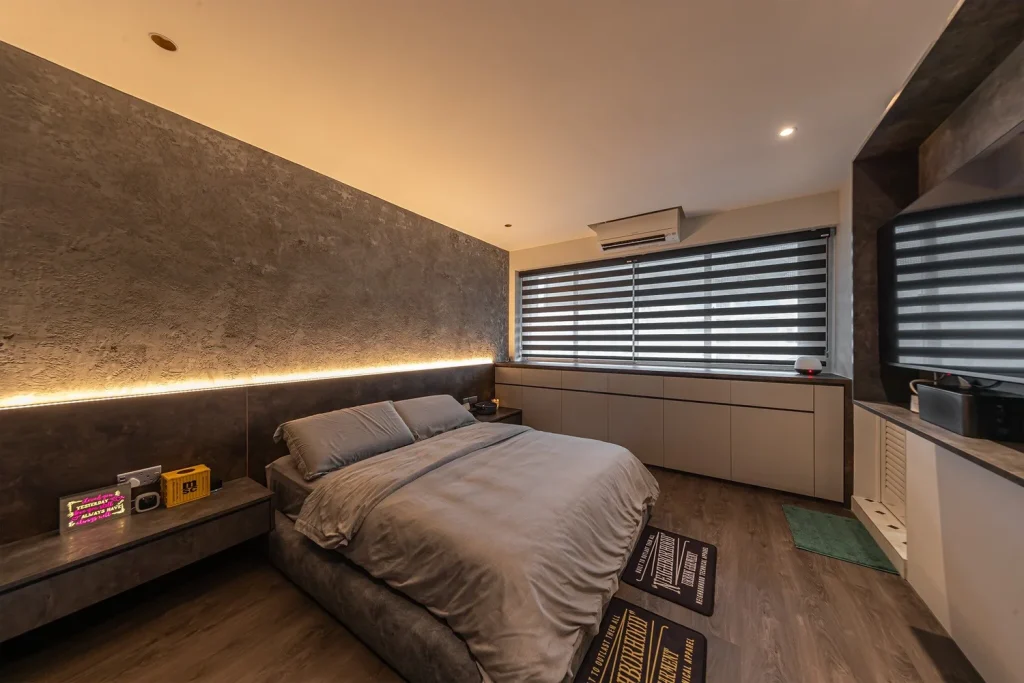
Bedrooms should feel like you pressed a giant “shh” button. Japandi gets you there without turning the room into a spa catalogue. Most people think it’s a décor style; honestly, it’s more like an attitude—like deciding you’re done with visual noise.
The focus remains on simple lines, honest materials, and a layout that makes the room feel calmer and a little more open, even if the space isn’t big to begin with.
That’s the real appeal of Japandi in 2026. You’re essentially choosing a quiet rebellion against visual noise so you can think more clearly at home. Though, honestly, some mornings I still stare at my messy desk and wonder why I bother. The blend of Japanese minimalism and Scandinavian warmth gives you a personal retreat that feels intentional rather than empty.
You can start with:
- Light woods like ash or birch, and just a few well-made pieces you actually use
- A low platform bed: it frees up sightlines and somehow makes the ceiling feel higher.
- Textured natural fabrics (linen and cotton age beautifully over time)
- And honestly, just pick one deeper accent—charcoal or forest green usually works
- Layered warm lighting: a couple of table lamps + a dimmable main light instead of a single harsh source.
But here’s the thing many people forget: Japandi is less a “style” and more a mindset.
The first is wabi-sabi—appreciating small imperfections in handmade objects. I still have a slightly lopsided ceramic lamp from years ago. Technically it’s a flaw; personally I think it’s charming.
And the second principle is Ma, which basically means leaving enough breathing room so the eye can rest. It sounds abstract until you realise it’s just “leave enough empty space so your brain stops buzzing.” I mean, sometimes I just look at my empty nightstand and feel mildly triumphant.
At the end of the day, it just means more closed storage and fewer things sitting out. It’s surprisingly calming. Who knew a few cabinets could feel like therapy? Also, no one ever regrets adding more closed storage. Literally no one.
And if you live in an HDB home, there’s a practical bonus: Japandi naturally makes the most of tight spaces, where every inch has to pull its weight.
Maybe it’s just me, but I get weirdly annoyed when things are too precious.
5. Zones That Nurture Human Connection in Kitchens
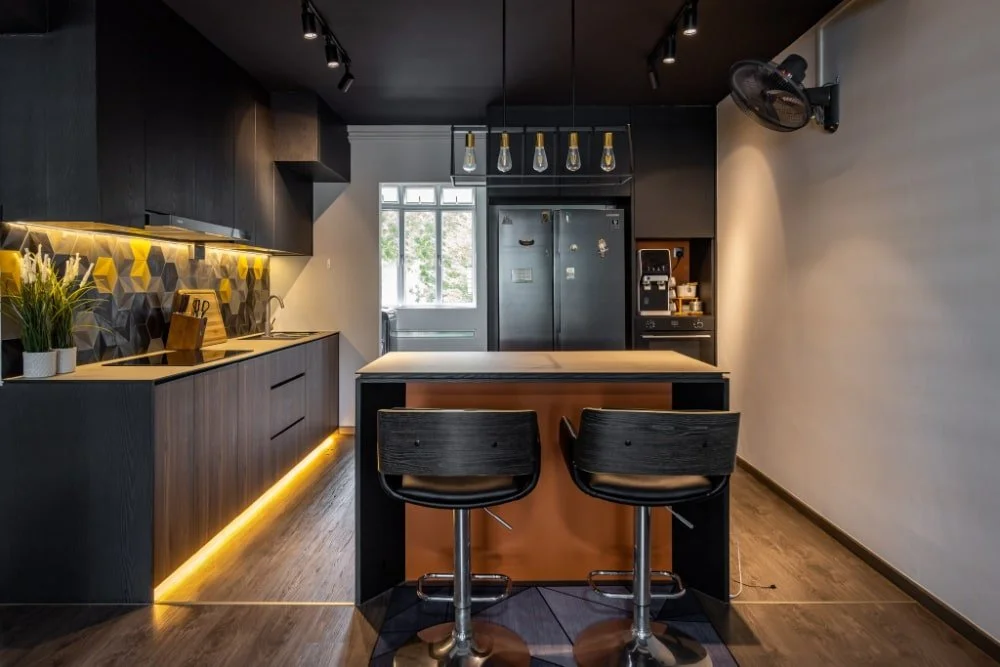
In most Singapore homes I work on, the kitchen design ideas end up doing double duty whether you plan for it or not. Cooking, chatting, kids doing homework, it all happens in the same stretch of space. The trick is zoning: a clear prep area, a cleaning zone, and a social spot.
Start by combining a dry kitchen with a compact wet zone. Suddenly, you’re part of the conversation, not tucked away behind the cooking mess. It just makes the space feel more social and less isolating.
For smaller spaces, even a slim island or peninsula becomes the spot where everything happens, quick meals, homework, or just catching up while someone’s cooking.
A couple of practical features I almost always recommend: fluted glass partitions (they keep smells mostly contained but still let in light) and deep drawers for pots and pans. You’d be surprised how much difference a drawer makes. Seriously, drawers change the way you use a kitchen. No more bending and digging. And wherever possible, integrate appliances so the whole space looks cleaner.
So you end up with a kitchen design that feels calmer to be in. It’s not magic but such a idea feels less frantic during busy evenings. When the counters aren’t crowded, the whole space feels easier to work in and easier to relax around.
Smaller kitchens benefit from vertically layered storage, whereas larger homes can accommodate double-sided islands or extended prep counters. With the right zones in place, the kitchen naturally becomes the home’s gathering point. It’s practical, easy to navigate, and a nicer place to spend time together.
I know, it sounds dramatic, but it actually changes how that flat vibes.
6. Architectural Storage Walls — hide the mess, keep the life
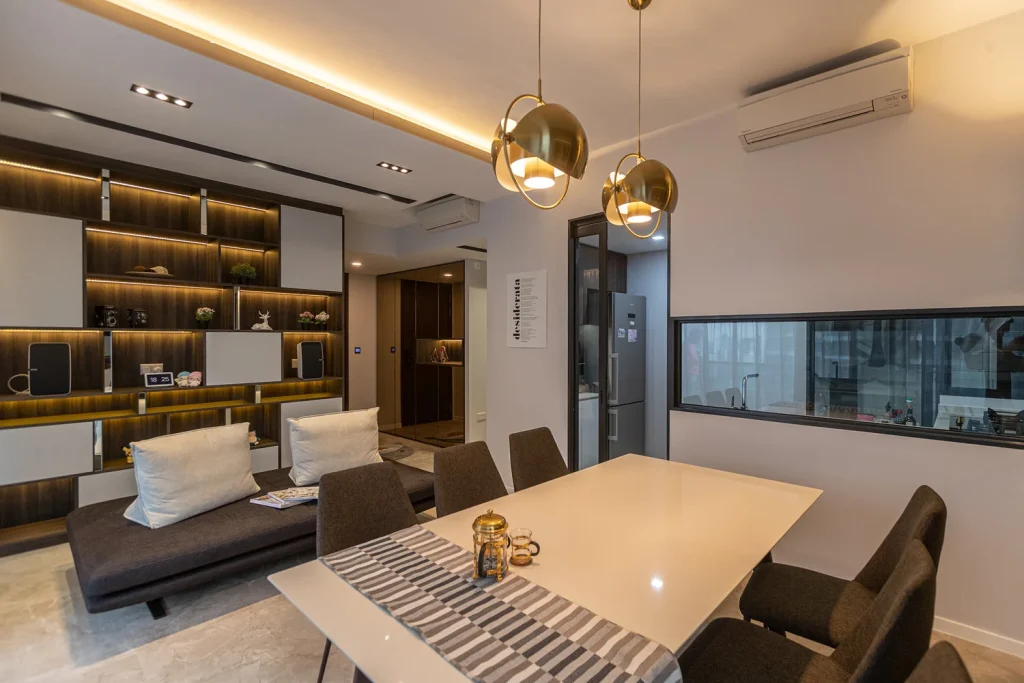
Storage walls are the unsung heroes of Singapore flats. They’re not glamorous but they do all the heavy lifting—kind of like the friend who always shows up early to help set up but never posts about it.
Built-in, full-height units are a small investment that pay you back every single day: toy bins out of sight, ironing boards tucked away, everything finally having a place. And honestly, I still don’t know why more people don’t start with storage first. Life gets so much easier.
I usually guide clients with a simple 70/30 rule that works surprisingly well. Most of it is closed cabinetry, with about 30% open niches for the things you actually want to see. It lets personality come through with books, art, or plants while the closed units keep visual noise down and help the room feel calmer.
There’s a practical perk here too. Putting warm-toned LEDs inside niches or along the base of the storage wall creates a soft, ambient glow. Do you really need a whole wall of LEDs? Maybe not. Sometimes one strip does the trick and makes the entire room feel more welcoming. Full disclosure: I only figured this out after messing it up one too many times.
And here’s where it gets really helpful day-to-day: storage walls work everywhere. From transforming an entryway or a narrow hallway to creating a feature wall for the TV or adding wardrobe space in the bedroom, they adapt to whatever the home needs.
If you have kids, these walls quickly become a sanity-saving device. Not kidding. You can get the place guest-ready in minutes—something most families tell me feels like a small miracle.
Honestly, in most HDB homes I’ve worked on, this ends up being the most practical space-saving move of all. For families with children, pets, or just busy schedules, storage walls create a resilient, tidy backdrop that evolves with the household.
Quick Wrap-Up
These 6 interior design ideas aren’t trends to chase; they’re small, practical moves that make a home a bit easier to live around, especially on weekdays.
If I had to pick one quick win for most HDBs, it would be to add more closed storage and invest in lighting that you can dim. Doing so makes the whole place feel like it’s working for you instead of the other way around.
If you’re gathering ideas for your own place, it might also help to look through curated portfolios of interior design ideas in Singapore. Seeing how other homeowners solved similar layout challenges can spark a few ideas of your own.