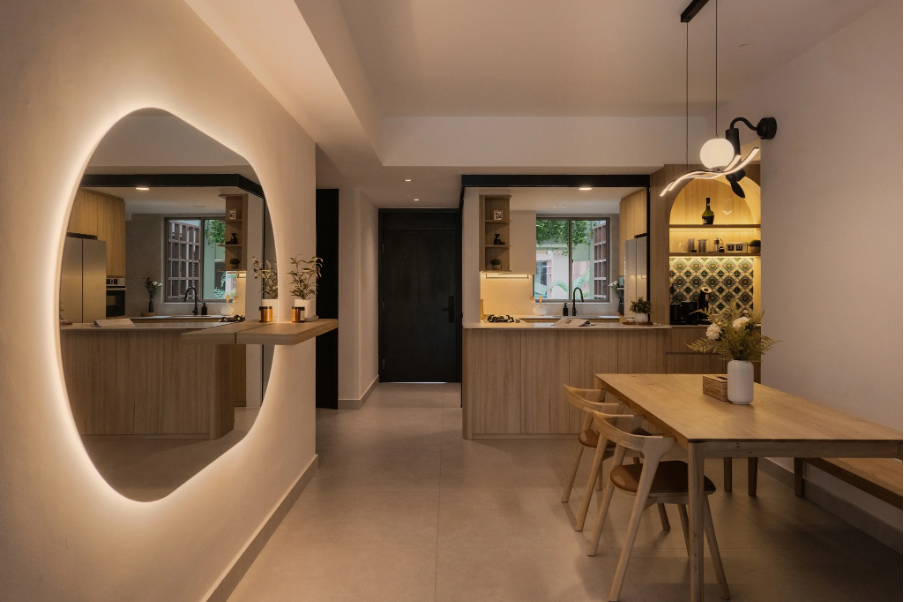
Living in a small space can be tricky. You know the feeling: every inch feels like it’s screaming for attention, your furniture is somehow either too big or too small, and the clutter seems to have a life of its own.
But here’s the good news: small spaces don’t have to feel cramped. In fact, with a few thoughtful tweaks, your tiny apartment, studio, or office can feel airy, comfortable, and surprisingly open.
I’m not talking about magic tricks or knocking down walls. It’s really about working with what you have, using your brain a little, and letting design do the heavy lifting.
Here are five interior design ideas that actually make small spaces feel bigger, and a few bonus tips at the end that people often overlook.
Let Light Work Its Magic
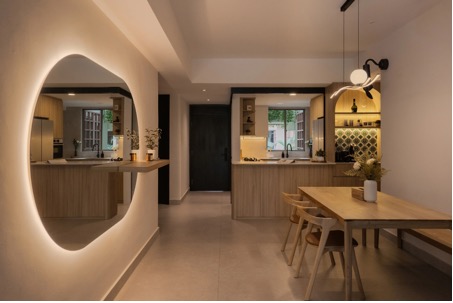
If there’s one thing that instantly makes any room feel bigger, it’s light. Natural light, in particular, is like a free superpower. It makes walls disappear, ceilings seem higher, and corners less… corner-y.
Now, if you’re thinking, “But I only have one tiny window,” don’t panic. There are still ways to coax that light into doing its job.
Some tips that actually work:
Go sheer:
Heavy curtains will just weigh a room down. Sheer curtains or light fabrics let light in but keep things private.
Mirror, mirror:
Placing a mirror across from your window not only makes the room look bigger but also literally doubles your sunlight. Science-approved.
Light walls:
Whites, creams, pale greys – they all reflect light rather than soak it up. Dark walls might look chic, but they will shrink your space faster than you can say “tiny studio.”
Layered lighting:
When the sun sets, don’t let your room go dark and depressing. Use a mix of overhead lights, floor lamps, and maybe even a subtle LED strip to keep everything bright and open.
I once walked into a tiny 400-square-foot apartment with soft cream walls, a huge mirror, and sheer curtains. Honestly? It felt like stepping into a loft twice its size. No exaggeration. Light does that.
Choose Furniture That Does More Than Just Sit There
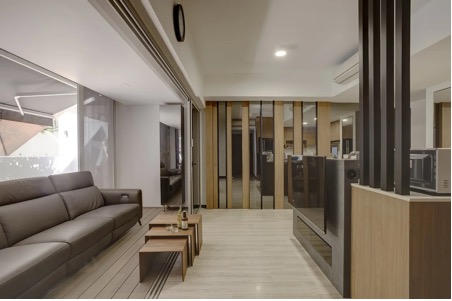
For a small space, every piece of furniture needs to pull its weight in gold. Large sofas and random tables are space thieves, and soon enough they will have consumed all the floor space in a room. However, cleverly chosen multifunctional furniture can add lots of value to a room.
Multi-functional pieces
There are lots of different types of multi-functional furniture too. For example, a sofa bed is ideal for homes that have the occasional overnight guest. An ottoman with storage is another great option as it can be used as a seat and then you can use the storage space to stash things like blankets and throws. This is a great way to keep clutter at bay. A wall-mounted desk which folds down when required is another great option too. This means you have a workspace when you need it and none of the time or storage space afterwards.
See-through or leggy furniture
Instead of choosing furniture with solid bases, opt for designs with Exposed Legs instead. Although some designs with exposed legs may not be to everyone’s taste, the space-saving benefits are huge. Most designs of furniture with exposed legs, i.e. sofas, chairs, coffee tables, etc create the illusion of more space than similar items of furniture with solid bases. By choosing furniture that creates space, rooms with limited space will appear lighter and even bigger than they actually are. This is especially important in small homes, as furniture with solid bases creates the illusion of a heavier room, and this is something that we should avoid at all costs.
Foldable or stackable options
When you have a small home, you will want to make sure any furniture you choose folds up, is stackable, or can be stored in some other way so it is not sitting around when it is not in use. So when, for example, you have more chairs for dining than you will have people to eat with, you will want to store the chairs until they are needed. The same can be said for side tables as well.
Floating furniture
When storage furniture is wall-mounted as opposed to freestanding, it can save so much space in small homes. This storage can be created with a few shelves of varying sizes, filled with books, storage containers, plants, and other home furnishings such as artefacts and ornaments. A great example of how furniture in your tiny home can function is displayed in this tiny home office. The mounted desk is functional, as is the storage ottoman, which also serves as a seat.
Storage Is Everything (But It Doesn’t Have to Look Boring)
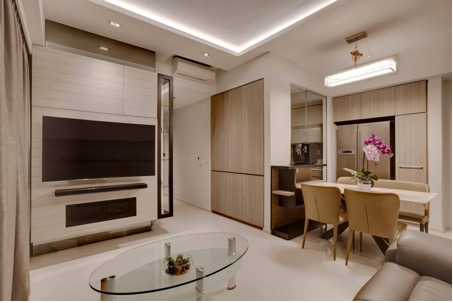
Get more from less space by removing clutter and using the best storage available. Most storage comes in many styles to go with any décor. Therefore, you can pick storage that will go well with the current look of your space. So, no matter what kind of modern or more traditional space you are trying to keep looking great, there is the perfect storage for you.
Go vertical
Add some vertical space to your room. By purchasing tall narrow shelves for your books, storage boxes and other objects that you wish to display around your room, you can make your room look and feel bigger as your eyes are drawn up to the top of the room by the many vertical objects.
Hidden storage
Items which you have to store on a daily basis do not have to leave the room. Storage furniture like a bed with drawers, a storage table and a storage ottoman keeps your items organised and out of sight, but still very much at your fingertips.
Hooks, racks and pegboards
Hooks, racks and pegboards: Use hooks, racks and pegboards to hold items such as bags, coats and hats in rooms like the hallway, and store items such as tools, utensils and stationery in the kitchen, home office or study.
Storage as décor
Clever storage solutions will not only store your items but also be great decorative pieces that add character to your home. This example is from a living room; the room has been kept tidy and looks spacious because of a tall bookcase to hold books, etc. and a storage bench which keeps all items in order and clears the floor.
Play With Colour, Patterns, and Texture
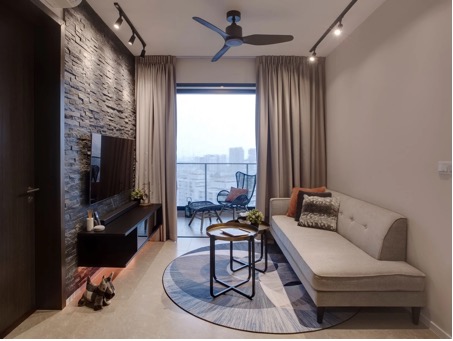
Creating the illusion of a larger space through colour, pattern, and texture is largely a psychological effect. That’s why, you should be very subtle, and work with the overall impression through many ‘small’ decisions.
Light and neutral tones
Use Light and Neutral Colours on walls to make them recede. Dark-colored walls create a so-called ‘power look ’, but they absorb a lot of light and thus make rooms appear smaller than they actually are.
Monochromatic schemes
There are many different variations of one colour that can be used in a space to create a cohesive look. Using the same colour for your walls, curtains, and furniture creates a unified look and makes the space appear larger.
Small pops of contrast
Darker items in a room than the rest. A wonderful piece of art or an accent object in a room. Don’t overdo it with the number of contrasting items, as you want the item to be a focal point in the room and not create too much visual noise.
Reflective surfaces
If possible, add some reflective surfaces to a room, such as glass or glossy tiles, as this will help to bounce light around the room, keeping it light even when it is dark. A metal finish can also add a touch of sophistication to a room, such as a vase, bowl, or even candles.
Patterns and texture
Another trick for heightening a room is to use vertical stripes on a feature wall. It is also most effective when mixed with large single patterns and plenty of texture from throw blankets, baskets, and even tall, thin ceramic vases. This will add lots of interest to the space without making it feel cluttered.
Decorating a small room with soft painted finishes in pale greys, paired with large soft grey curtains, some interesting oddities, and a striped wall or two, will create a space that is not only comfortable to be in but also feels very spacious.
Keep It Open But Define Zones
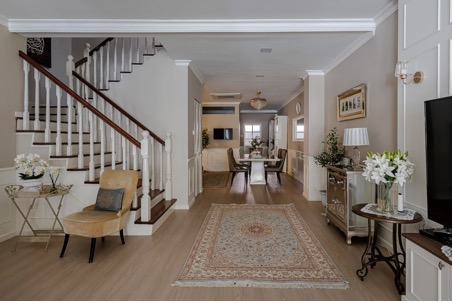
This is how you can place furniture in a room and how that room will then feel. So this room, for example, feels free-flowing, but it does have certain areas set up for certain purposes. Its openness keeps it from feeling too cluttered, but it still needs a certain amount of organisation so people can walk through the room comfortably.
Minimal partitions
Rather than building solid walls, use low shelves, light curtains, and open shelving to divide a room up into individual zones. This type of partitioning will keep the lines in the room open whilst defining different areas.
Floating arrangements
Don’t corner your furniture. If you place all of the furniture against the walls of a small room, it can make the room feel claustrophobic and give it the appearance of being smaller. Creating a void in the middle of the room has the opposite effect; the room will feel large and open.
Subtle zone definition
Use items to establish different zones such as a rug in a seating area, a floor lamp in a reading area, a desk in a work area and so on. These items will establish boundaries in the room without having to use any partitions.
Clear pathways
Also try to leave enough space in between the furniture to allow people to move around freely. Avoid very tight corners as they create constrictions in the space. Here, the low shelf above creates a divider between the bed in the sleeping area and the living space. The rug creates a seating area, and a small desk against the window with this fantastic view could be your workspace. Intentionally created to be a small space rather than just a room that wanders aimlessly.
Small Tweaks That Make a Difference
There are a few very simple techniques that most people have no idea about, but that will immediately open up a very small space. Firstly, Glass Partitions and Doors can make a huge difference, and by painting all of the doors in the house in the same colour, you can give the illusion that the whole house is one single space. It also helps to keep a small space looking good by keeping the same flooring throughout. This stops the space from being chopped up into little areas, and by creating one continuous surface, it will immediately make the space feel larger.
In addition to this, adding some plants to the space, even just two in small pots, will not only bring life to the area but also add volume. Finally, using lots of different materials, tones, and textures throughout a very small space can have the opposite effect of what you would expect and actually make the space feel smaller rather than larger. However, using only materials, tones, and textures that are all similar or all ‘in the same family’ will help the eye ‘perceive’ the space as a single space rather than a number of small areas.
Wrapping It Up
Small spaces can be a problem. They can present a great challenge and many opportunities for creative solutions. With a little thought and creativity, along with smart interior design inspiration and choices, small apartments can be opened up, styled, and become the most comfortable rooms to relax in.
To begin with, make as much use of light as possible. Then select the correct furniture for your space and choose interior design choices that enable the best possible storage. Next, select the correct colours and various patterns for your space. Finally, ensure your space is open-plan and utilise it as effectively as possible.