
For Primary School students in Singapore studying Higher Chinese, it is considered to be a very difficult subject and can only be mastered by academically inclined students. Many think that children with strong language skills will be able to perform better in Higher Chinese.
For many parents, they only realize that their child is having difficulties with Higher Chinese at a later stage. While the child may be performing well in other subjects such as Science, Mathematics and Social Studies, Higher Chinese is another subject that requires constant practice and drill over a long period of time for the child to acquire sufficient skills to perform well in school.
As primary school progresses however, most children face an increased amount of academic work and their parents find it increasingly difficult to source help for their child to keep up with the Higher Chinese Syllabus and to improve in Higher Chinese in general.
What Is Primary School Higher Chinese?
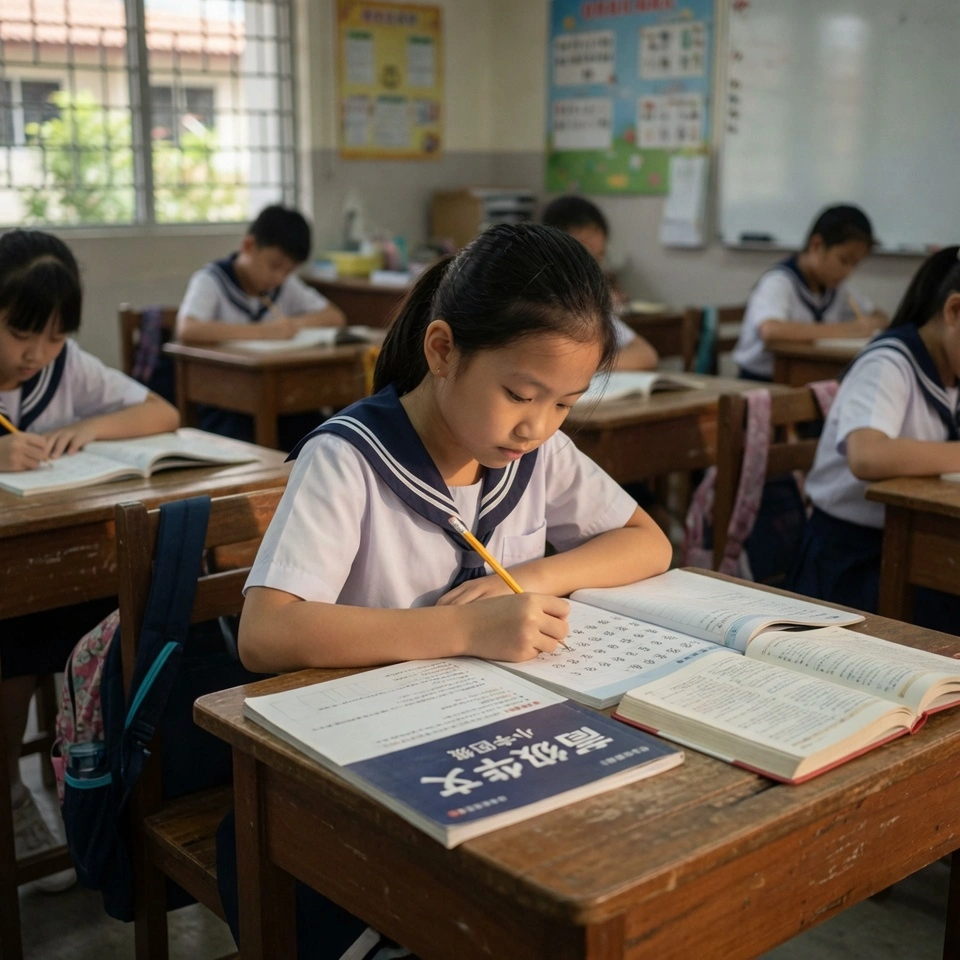
Higher Chinese is a program offered in the higher primary school levels to help students attain greater depth in Chinese language learning, to enable them to possess greater proficiency in Chinese and appreciation for Chinese language and culture.
- More advanced vocabulary and idiomatic expressions
- Longer and more challenging comprehension passages
- Greater expectations in composition writing
- Higher standards during oral examinations
- More complex sentence structures and language usage
Why Primary School Students Often Struggle with Higher Chinese
Primary school-going children generally use English as their first language and are less likely to engage in Chinese outside of school. Thus, they may have a large vocabulary gap in addition to lower reading speed and less ability to speak and write Chinese.
There are three major areas where Primary School Students are found wanting in Higher Chinese.
Higher Chinese Comprehension
Passages in Higher Chinese classes are even more complicated than those read in Preliminary Chinese classes. Most of the higher-level Chinese reading passages contain more difficult vocabulary and some even include cultural references that students may not be familiar with. Students also need to understand more than what is literally written in the passage, that is, they must also understand the author’s implied meaning.
Composition Writing in Higher Chinese
Quality compositions would contain good organization, plenty of vocabulary, proper linking of sentences, and examples to prove a point. But the biggest problem a lot of students are having is that they know what they want to say, but just do not have the right words to say it.
Oral Communication in Higher Chinese
When speaking, not only are students being tested on their pronunciation, they are also being tested on their ability to listen to a question and respond as quickly as possible while clearly and coherently expressing their ideas.
Without regular practice, improvement in these areas often becomes gradual and inconsistent.
Is Higher Chinese Worth Taking?
Whether Higher Chinese is worth the hard work for a child depends upon several factors including the child’s language ability, his/her interest in Chinese, and future academic goals.
Students with good Chinese language skills and an interest in studying Higher Chinese can find the subject interesting and challenging. Higher Chinese helps students to develop important communication, reading and critical thinking skills which are not only useful for studying Chinese but also for other subjects and for life in general.
While Higher Chinese can be a great subject for students of Chinese background, it is not a subject to which children or parents should be led because of prestige or academic expectations of their child. It is a demanding subject that requires much effort throughout the academic year by students who are already engaged in other demanding subjects. Children should be engaged in subjects that they are performing well in and have good learning habits for, not just because of academic expectations of them.
Why Many Parents Consider Higher Chinese Tuition
Most families do not seek tuition after a single disappointing test result.
Instead, they notice recurring patterns.
A child may require increasingly long periods to complete homework assignments. Oral practice may become a source of frustration. Comprehension scores may plateau despite consistent effort.
At that stage, parents often look for additional support.
Effective Higher Chinese tuition provides more than extra worksheets. A structured programme helps students identify weaknesses, strengthen language foundations, and receive targeted feedback that schools may not always have sufficient time to provide.
Students typically benefit from tuition when they need support with:
- Vocabulary acquisition
- Comprehension techniques
- Composition planning and writing
- Oral examination preparation
- Exam strategy and time management
The goal extends beyond improving grades. Strong tuition builds confidence and develops habits that support long-term language growth.
How to Choose the Best Higher Chinese Tuition Centre in Singapore
Singapore offers a wide range of Chinese tuition options. Quality varies considerably, which makes careful evaluation important.
When comparing centres, parents should focus on several key factors.
Structured Curriculum
Students require a clear learning pathway rather than repetitive drilling. Effective programmes introduce concepts systematically and reinforce them through guided practice.
Focus on Core Language Skills
A strong programme addresses comprehension, composition, oral communication, vocabulary development, and reading fluency rather than concentrating on only one examination component.
Experienced Teachers
Teachers who understand MOE standards can identify common mistakes, explain complex concepts clearly, and provide relevant exam guidance.
Individual Feedback
Language development remains highly personal. Students progress faster when teachers review written work carefully and provide specific recommendations for improvement.
Consistent Progress Monitoring
Regular assessments help parents understand whether tuition is producing meaningful improvement and highlight areas that require additional attention.
Notable Higher Chinese Tuition Centres in Singapore
Parents researching tuition options will encounter numerous providers across Singapore. Several centres have established strong reputations through curriculum quality, teaching methodology, and student outcomes.
Connected Learning
Connected Learning focuses on developing long-term language competency rather than relying solely on examination drills. Its programme places emphasis on comprehension, composition development, oral communication, and confidence building.
The structured approach appeals to both students who need academic support and those seeking to maintain strong performance levels throughout primary school.
Berries World of Learning School
Berries has built a significant presence within Singapore’s Chinese enrichment landscape. Its lessons incorporate interactive teaching methods and language immersion strategies that engage younger learners effectively.
Tien Hsia Language School
Tien Hsia maintains a longstanding reputation for building strong foundations in reading and writing. The centre follows a structured and academically focused curriculum that appeals to disciplined learners.
Hua Language Centre
Hua Language Centre combines curriculum-based instruction with examination preparation. Its programmes address key areas such as comprehension, vocabulary development, and composition writing.
EduFirst Learning Centre
EduFirst offers Chinese tuition alongside multiple academic subjects. Families seeking consolidated academic support often appreciate the convenience of a multi-subject learning environment.
How Parents Can Support Higher Chinese Learning at Home
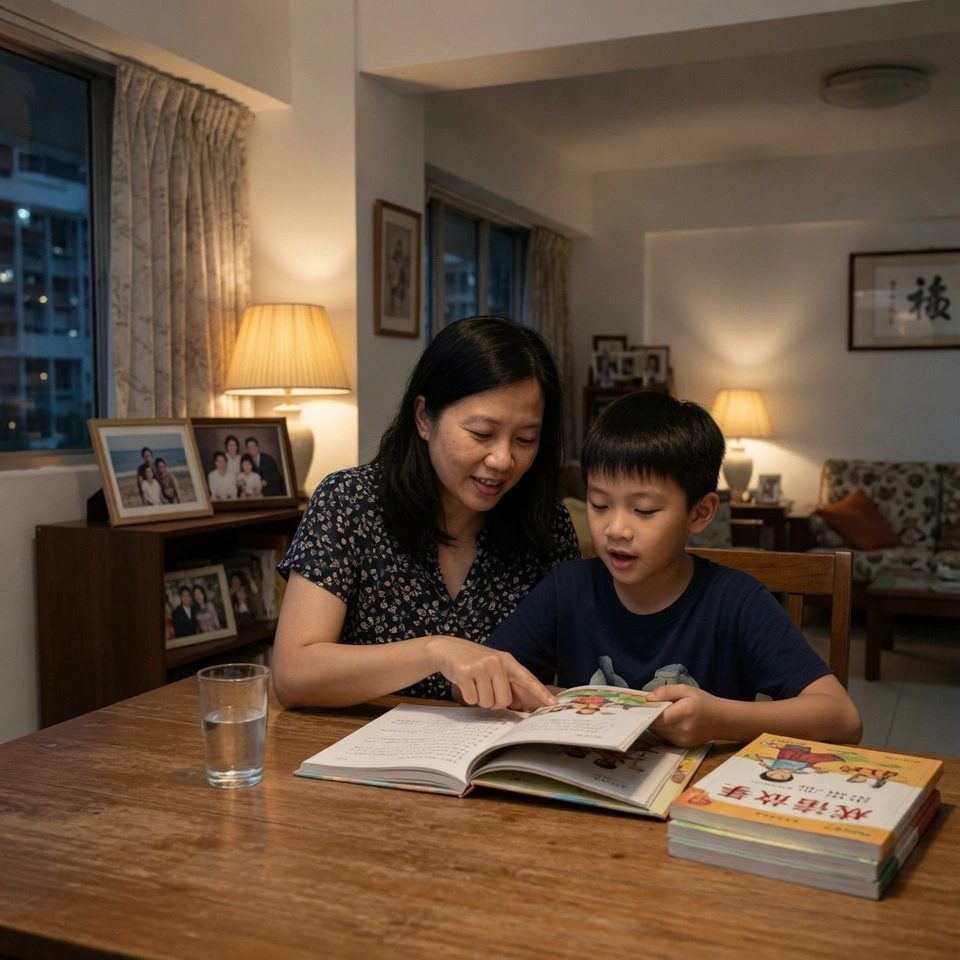
Tuition alone does not determine success.
Students who perform well typically engage with the language beyond formal lessons.
Parents can encourage progress through practical activities such as:
- Reading age-appropriate Chinese books regularly
- Watching Chinese educational programmes
- Practising conversational Chinese during daily interactions
- Reviewing new vocabulary weekly
- Encouraging regular composition writing practice
Small but consistent exposure often produces stronger results than occasional intensive study sessions.
Final Thoughts
Consistency is more important than natural ability when it comes to designing a good primary school Higher Chinese program. Children who do well in school develop good language habits through regular school lessons, practice and support over time.
The real challenge of many families today is not knowing whether their child needs help outside of school or not, and if so, what type of help is required.
Results from additional tests can indicate a child’s area of strength or weakness in Higher Chinese. However, what is most important is the learning environment a child is in. The environment can help to build up a child’s confidence, improve his or her communication skills, and develop him or her to become proficient in Higher Chinese after he or she leaves primary school.
FAQs
Does my child need Higher Chinese tuition?
Higher Chinese tuition can supplement the school’s Higher Chinese program and help students who are able to cope in class but require additional support to reinforce what they have learned in school. Additional support can be provided to students who are having difficulties in reading, writing Higher Chinese vocabulary, understanding Higher Chinese comprehension passages and improving their speaking and listening skills in Higher Chinese.
When should a student start Higher Chinese tuition?
Many parents seek tuition for their children when they notice that their child is not progressing, having learning gaps or performing poorly in school. Providing the child with early tuition will thus help him or her to avoid learning gaps.
Is Higher Chinese important for PSLE?
Higher Chinese is good for students taking Higher Chinese as a school subject and who can cope with additional work. However, not all children should take Higher Chinese as it can put too much pressure on them if they are already struggling to manage their school work.