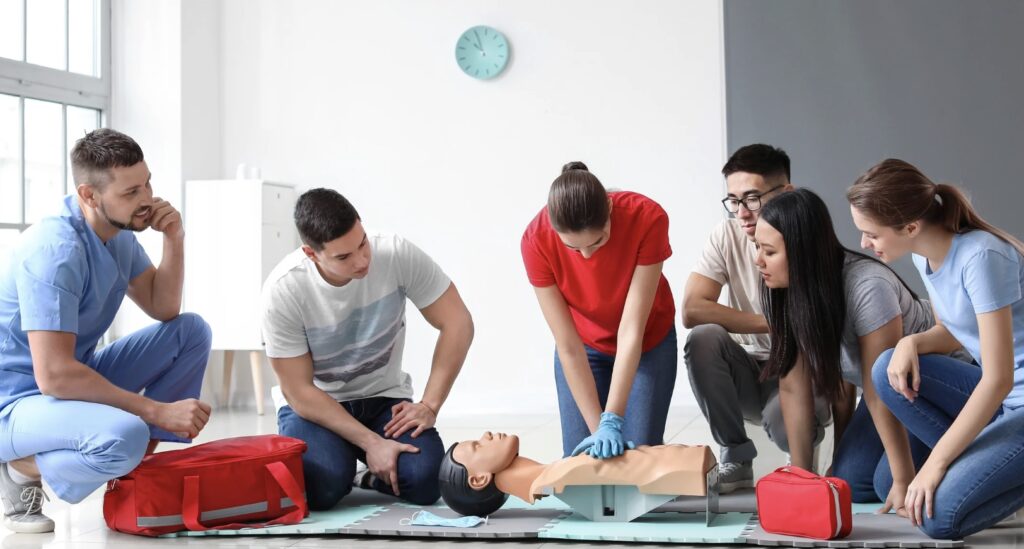
In most workplaces, safety procedures exist, but they often live in documents no one revisits. For many years, we have noticed one thing: When a real emergency happens, those documents don’t respond. People do.
And in those first critical minutes, there is only one thing that separates panic from action: First Aid Training.
You must have noticed that in Singapore, where workplace standards are high and expectations even higher, first aid training is no longer just a compliance checkbox—it’s a practical, life-saving investment.
What Is First Aid Training (And What Does It Include)?
First aid training helps employees get the skills to respond immediately to injuries and medical emergencies before professional help arrives. Every workplace first aid course in Singapore should include:
- CPR (Cardiopulmonary Resuscitation)
- AED (Automated External Defibrillator) usage
- Bleeding control and wound management
- Burn and fracture treatment
- Choking response techniques
- Handling unconsciousness and seizures
- Basic emergency coordination and communication
More importantly, it teaches something most individuals lack in emergency situations: decision-making under pressure. Because in real emergencies, hesitation itself is the biggest risk.
Is First Aid Training Mandatory in Singapore Workplaces?
Yes, in most cases. Under the Workplace Safety and Health (First Aid) Regulations administered by the Ministry of Manpower (MOM), every Singapore workplace is required to have trained first aiders on site. The specific ratio depends on workforce size and industry risk:
General workplaces: There must be at least one trained first aider for every 100 employees.
Higher-risk industries such as construction, manufacturing, shipyards, and chemical handling: Typically, one first aider per 25 employees is required.
First aiders must hold a valid certification from a training provider accredited by the Singapore Resuscitation and First Aid Council (SRFAC).
Apart from these, smaller offices that fall below the formal threshold are strongly encouraged to maintain at least one trained first aider on site, both as a duty-of-care measure and because emergencies don’t wait for headcount thresholds.
In practice, most corporate offices, schools, and public-facing businesses in Singapore now treat first aid certification as a baseline workplace standard rather than an optional extra.
Why First Aid Training Matters More Than Ever
1. Immediate Response Saves Lives
Emergency services in Singapore are efficient, but they are not instantaneous. The first 5 – 10 minutes after an incident are often the most critical. A trained employee can:
- Perform CPR before cardiac arrest becomes fatal
- Stop severe bleeding
- Stabilise someone until paramedics arrive
2. Reduces the Severity of Injuries
What starts as a minor incident can escalate quickly without proper handling. For example, if handled incorrectly, fractures can get worse over time. In case of a burning incident, a delayed response can increase long-term impact. First aid training helps contain the situation early, reducing complications.
3. Builds a Safer, More Confident Workplace
We often notice that employees feel more secure knowing someone nearby can handle emergencies. This not only builds trust among the team but also keeps morale up because safety isn’t just physical, it’s psychological.
4. Protects Businesses from Risk
Beyond human safety, there’s also organisational impact. Workplaces without trained responders may face higher liability risks, compliance issues in regulated industries, and reputational damage after incidents. First aid training acts as both a safety measure and a risk management strategy.
Real Workplace Scenario (Why This Actually Matters)
Here is a scenario that would help better understand the importance of first aid training.
An employee collapses during a meeting due to cardiac arrest. There’s an AED in the building, but no one knows how to use it. Panic spreads. Someone calls emergency services. Everyone waits.
Now, on the other hand, if you have people trained in first aid on board, they would immediately begin the CPR and use the AED within minutes.
This difference in response can determine survival. Situations like this happen in offices, malls, and public spaces every year; proper first aid training can prevent the worst from happening.
Common Misconceptions About First Aid Training in Singapore
Many companies assume first aid training is only necessary for high-risk industries. But in reality, most workplace emergencies in Singapore involve:
- Fainting or dizziness
- Cardiac issues
- Choking incidents
- Falls in office environments
The risk is not the industry; it’s the unpredictability of human health.
How to Choose the Right First Aid Training Provider in Singapore
Not all training programs deliver the same level of practical readiness. When selecting a provider, look for:
1. Certification & Accreditation
Ensure the course meets recognised Singapore standards and provides valid certification.
2. Hands-On Practical Training
Theory alone is not enough. Real practice with CPR dummies and AED devices is essential.
3. Experienced Trainers
Instructors with real emergency or healthcare experience bring valuable insights.
4. Updated Protocols
First aid guidelines evolve. Training should reflect the latest procedures.
5. Workplace-Specific Customisation
Different industries have different risks. The training should reflect your environment.
A reputable first aid training company will deliver structured, workplace-focused first aid programs that emphasise:
- Practical, hands-on learning
- Real-world emergency scenarios
- Certification aligned with industry expectations
For companies looking to move beyond theory and build actual readiness, this type of structured training is far more effective.
How Long Does First Aid Certification Last in Singapore?
Most first aid certifications in Singapore are valid for 2 years, after which a refresher course is required. Regular renewal ensures:
- Skills remain sharp
- Employees stay updated with the latest protocols
- Confidence in handling emergencies stays high
Final Thoughts
First aid training is often treated as a formality until it becomes a necessity. In reality, it is one of the few workplace investments that directly impacts human life in real time. When an emergency happens, there’s no time to search for instructions or wait for help. What matters is simple:
Is someone ready to act?
Because in those critical moments, a trained employee doesn’t just follow procedures, they become the difference between escalation and control, between panic and response, and sometimes, between life and loss.
FAQs
Is first aid training expensive?
Costs vary depending on the course type and provider, but most workplace programs are affordable compared to the risk they mitigate.
How long does a course take?
Typically, 1 to 2 days for basic certification courses.
How many employees should be trained?
It depends on company size, but the best practice is to have multiple trained individuals per department or floor.
Can training be done on-site?
Yes. Many providers offer on-site corporate training, making it more convenient for teams.